









Protein Types Explained: What Makes Them Different
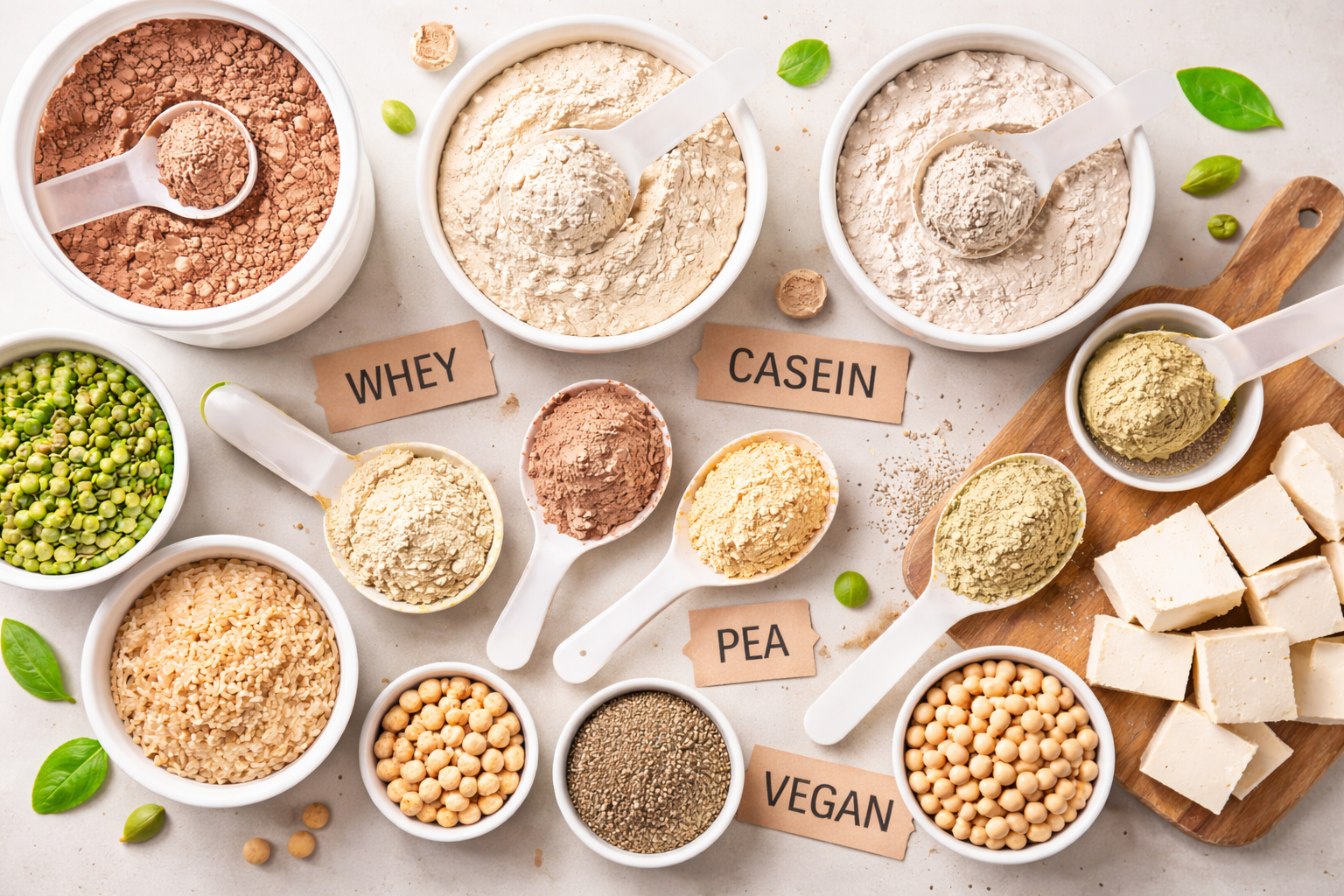
Understanding Different Types of Protein
Protein has long outgrown its role as a product used only in sports nutrition. Today, it is part of everyday diets for a much broader audience. Consumers choose protein not only to support muscle growth, but also to help maintain energy levels, manage appetite, recover after exercise, and improve overall nutritional balance. That is why interest in different types of protein continues to grow.
Whey Protein
The most widely recognized option is whey protein. Its main advantages are high bioavailability, a strong amino acid profile, and fast absorption. It is especially popular for post-workout recovery and active lifestyles.
On the downside, it may not be suitable for people with dairy intolerance or for those following a vegan lifestyle.
Casein Protein
Casein protein is also a non-vegan protein source, but it is absorbed more slowly. This makes it a good choice for longer-lasting satiety. It is often used in the evening or as part of a routine focused on appetite control.
At the same time, some consumers may find it heavier on digestion.
Plant-Based Proteins
Among plant-based options, the most common are pea, rice, soy, hemp, and blended vegan proteins. Their biggest advantage is that they fit naturally into a plant-based lifestyle and offer more choice for people who avoid dairy ingredients.
Many consumers also see plant-based proteins as a cleaner and more modern option. However, some plant proteins may have a less complete amino acid profile, a stronger taste, or a less smooth texture depending on the source.
Choosing the Right Protein
In the end, the right protein depends on a person’s goals, lifestyle, diet, and individual tolerance. That is why the market is moving toward greater variety: today’s consumers are not looking for one universal solution, but for a protein that fits their specific needs.